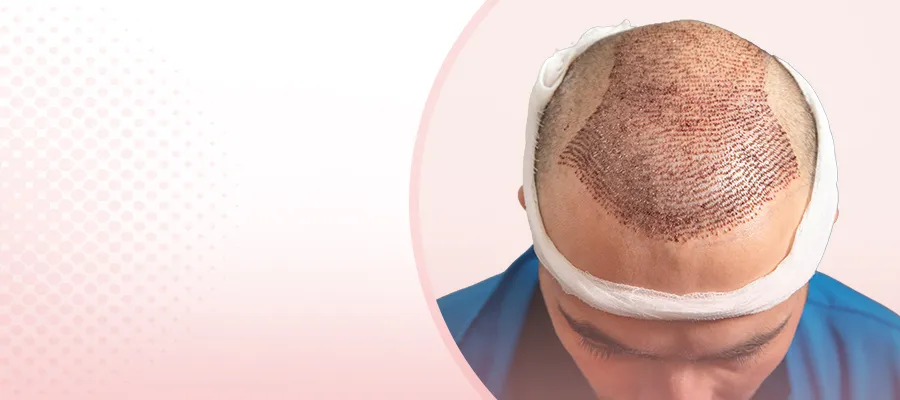
The surgery is the part most people focus on. The aftercare is what makes or breaks the grafts in the end. A hair transplant could be done flawlessly in the clinic but fail to yield desirable results when the initial days go poorly. Most of the instructions you will receive for those initial days are there for one good reason each, and knowing that helps comply with them.
The first 72 hours after hair transplant surgery
The grafts will not yet be fixed for the first three days. They are in their new position, but still require blood supply establishment to get stable enough. Any external factors, such as direct water flow or touch, will simply knock them loose at this stage.
It is necessary to have your head raised while sleeping. Adding another pillow does the trick for most patients, although some people prefer using a travel neck pillow. It is normal to observe swelling in the forehead and eye area on day two and three. It is a sign of fluid relocation, no cause for panic, and disappears within days.
Touching the transplanted area is to be avoided completely.
The first wash
Most surgeons allow gentle washing from around day three or four. The method matters here. Direct water pressure from a shower head aimed at the scalp is not appropriate at this stage. Water is poured slowly over the head, or even using a cup to moisten the area gradually. The shampoo is then applied through light dabbing rather than rubbing.
The aim of early cleansing is to soften and remove the scabs from around the transplant areas. These small scabs should not be picked or forced off. They come away on their own over the first week to ten days as washing continues. Pulling them off before they are ready can remove a graft along with the crust.
The shedding phase
Somewhere between two and four weeks after the procedure, the transplanted hairs begin to fall out. This is one of the aspects that surprises the majority of patients even after being forewarned about it prior to treatment. Hair starts falling, the scalp appears thinner compared to how it looked before the procedure, and a feeling that something has gone wrong arises.
There is no problem whatsoever. What actually happens is that the hair falls out but the follicle underneath stays unaffected. New hair begins to grow from these very follicles in approximately three to four months.
Sun exposure
The transplanted scalp is vulnerable to sunlight for the first several months. It could trigger skin pigmentation reactions and affect follicles that have not yet matured completely. The easiest way to protect against this is to wear a hat while spending time in the sun. Applying sunscreen directly on the transplanted scalp should also be avoided in the initial stages.
The scalp becomes much less sensitive to sunlight after about three months.
Exercise and physical activity
Light walking is fine from day two or three. Anything beyond that needs to wait. Exercise raises blood pressure and increases sweating, both of which affect the healing scalp. Strenuous activity, gym sessions, running, and anything involving significant physical exertion should be avoided for at least two weeks. Some surgeons recommend waiting four weeks for heavy training.
Swimming needs to wait longer. Chlorinated pool water and seawater both carry a risk of infection for the healing scalp. A month is the minimum, and some surgeons advise six weeks.
Smoking and alcohol
Smoking causes constriction in the blood vessels, making it difficult for sufficient blood to reach the transplanted area, which is contrary to what the healing process requires. It is during the first few weeks after surgery that the blood vessels are developing around the grafts. Stopping before surgery and staying off it for at least a month afterwards is the recommendation.
Alcohol affects blood thinning and circulation. It is best avoided for the first week after surgery, and in moderation for a few weeks beyond that.
What you can and cannot use on your hair
Within the first couple of weeks, nothing apart from products prescribed or recommended by the doctor should be applied on the head. No hair gel, hair spray, or oil should be applied at this stage. When the grafts have completely taken root, after about a month, regular products may be gradually reintroduced.
Heat styling tools such as blow dryers should only be used after ensuring full healing of the scalp. Cold settings may be used after about two weeks; however, high heat should be avoided until a minimum of one month after surgery.
Hair cutting around the grafted area may be possible after about a month, though trimming the grafted area itself should be delayed even further.
What to expect over the months that follow
The timeline is longer than most people anticipate. Visible growth begins around three to four months. At six months, the improvement is clear but not yet complete. The full result takes nine to twelve months to show properly, and in some cases slightly longer for the hairline to reach its final density.
Progress photographs taken monthly are useful for tracking the change, because the improvement is gradual enough that it can be difficult to notice day to day. Looking back at a photograph from month two compared to month eight tells the story more clearly than any single glance in a mirror.
The aftercare phase has nothing strenuous once the initial two weeks pass. Conditions become gradually easier until, by the end of the first month, patients are able to go back to their usual activities without much adjustment. The patience required is less about what you have to do and more about waiting for the result to arrive.
At Creas, post-operative guidance is provided as part of the transplant process. Dr. C Senthil Kumar and the team are available for follow-up throughout the recovery period.










 to the fullest with