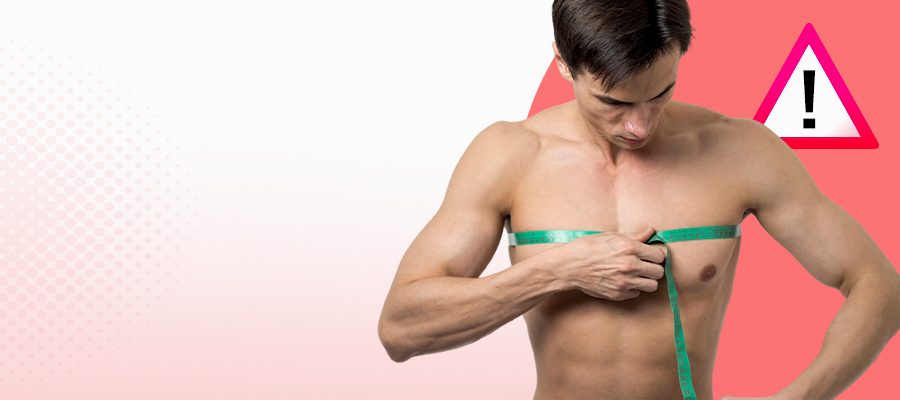
Most men dealing with chest fat have already tried the obvious solutions. Push-ups, cutting calories, maybe even losing weight elsewhere. But the chest stays stubbornly the same, or barely improves while everything else gets leaner. There’s a reason this happens, and understanding it saves months of wasted effort.
Why Your Chest Holds Onto Fat
Your body chooses where the fat will go and where it will come from when you lose weight. These are the rules that your genes set for you, not your exercise routine. Some guys have fat around their midsection. Other guys have it around their chest and sides. When you lose weight, the fat melts away in the order that your body likes best, and the chest is usually last.
Your hormones also play a part in this. Your testosterone levels decrease as you get older. Your estrogen levels increase a little bit. This is what causes the fat to accumulate in your chest. Being overweight isn’t helping, because fat produces estrogen.
Gynecomastia is different entirely. It’s actual glandular tissue that develops behind the nipple from hormonal imbalances or certain medications. If you feel firm tissue rather than soft fat, that’s gynecomastia. Diet and exercise won’t touch glandular tissue because it’s not fat responding to calorie deficits.
What Actually Works
Spot reduction is a myth that refuses to die. You cannot do chest exercises to burn chest fat specifically. Research has tested this repeatedly. Your body releases fat systemically from wherever it chooses, regardless of which muscles you’re working. Chest exercises build muscle underneath the fat, which improves appearance once you’ve lost weight, but they don’t target the fat itself.
Fat loss requires eating fewer calories than you burn, consistently, over months. A daily deficit of around 500 calories typically results in losing about half a kilo weekly. This comes from eating less, moving more, or both.
Building muscle raises your metabolism. More muscle means burning more calories even at rest. Compound movements like bench presses, rows, and shoulder work develop upper body musculature. Once fat reduces, this muscle creates better definition.
Cardio burns calories and supports the deficit needed for fat loss. Running, cycling, swimming, whatever you’ll actually do regularly. High-intensity intervals burn more in less time and keep metabolism elevated afterward.
Diet determines success more than exercise. You can’t work off consistently poor eating. Cutting processed foods, reducing alcohol, eating adequate protein, watching portions. Perfection isn’t required, just sustained improvement.
When Lifestyle Changes Aren’t Enough
Some men do everything right and chest fat persists. Not from lack of discipline, but because the problem is structural rather than behavioral.
Gynecomastia requires surgical removal of glandular tissue. The procedure also removes excess fat. It’s done as outpatient surgery. Most men return to normal activities within a week, though heavy exercise needs a few weeks. The tissue doesn’t grow back.
Liposuction works when the issue is primarily fat without significant glandular tissue. The surgeon removes stubborn deposits through small incisions, reshaping chest contour. Results are permanent if weight remains stable.
Surgery isn’t a shortcut. It’s a solution for problems that can’t be fixed otherwise. For men with genuine gynecomastia or localized fat resistant to proper diet and exercise, surgery addresses what effort alone cannot.
The Realistic Approach
Start by addressing what you control. If you’re not exercising consistently or your diet needs improvement, fix that first. Give it genuine effort over six months. Take progress photos because changes happen too gradually to notice daily.
If chest prominence persists after sustained effort, get it evaluated. A physical exam distinguishes between fat that might eventually respond and tissue requiring surgical intervention.
Chest fat is more than just a cosmetic issue. It is a factor in what you wear, whether you feel comfortable at the pool or gym, and how you carry yourself socially. Correcting it, whether it be through dedication to lifestyle changes or surgery when needed, is more important than most men understand until they have corrected it.










 to the fullest with